How Halving Events Affect Bitcoin Price Insights Revealed
How Halving Events Affect Bitcoin Price sets the stage for an exploration of a pivotal aspect of Bitcoin’s economic ecosystem. Halving events are critical milestones that significantly impact the supply of new Bitcoins entering the market, ultimately influencing price dynamics. By understanding the history and economic principles behind these events, we can better grasp how they shape market sentiment and investor behavior.
This discussion delves into the historical price trends surrounding past halving events, the shifts in market sentiment as these events approach, and the underlying supply and demand dynamics that come into play. By analyzing past data and expert predictions, we aim to provide a comprehensive understanding of how these unique occurrences affect Bitcoin’s price trajectory.
Introduction to Halving Events
Halving events are pivotal occurrences in Bitcoin’s lifecycle, designed to regulate the supply of new coins entering circulation. By programming the issuance of Bitcoin into its core protocol, halving events ensure that the total supply will never exceed 21 million coins. This systematic reduction in the rate at which new bitcoins are generated significantly impacts market dynamics, influencing both scarcity and price.Historically, Bitcoin has undergone several halving events since its inception.
The first took place in November 2012, reducing the block reward from 50 to 25 bitcoins. The second halving occurred in July 2016, further lowering the reward to 12.5 bitcoins, while the most recent halving was in May 2020, cutting the reward to 6.25 bitcoins. These events happen approximately every four years, or every 210,000 blocks mined, creating a predictable pattern that market participants can anticipate.The economic principles guiding halving events are rooted in the laws of supply and demand.
As the reward for mining new blocks is halved, the influx of new bitcoins into the market diminishes. Assuming demand remains constant or increases, this reduced supply can lead to upward pressure on prices. This relationship becomes particularly evident during previous halvings, where historical price rallies preceded and followed these events, demonstrating how scarcity can enhance perceived value.
Historical Impact of Halving Events on Bitcoin Price
Examining the effects of past halving events provides valuable insights into their influence on Bitcoin’s price trajectory. Prior halvings have consistently been followed by significant price increases, often driven by heightened media attention and investor speculation.
First Halving (2012)
The price of Bitcoin rose from approximately $12 at the time of the halving to over $1,100 within a year. This meteoric rise was fueled by growing awareness and adoption of Bitcoin.
Second Halving (2016)
Bitcoin’s price climbed from around $650 to nearly $20,000 by the end of 2017, showcasing the immense impact of reduced supply combined with increasing demand in a burgeoning market.
Third Halving (2020)
Leading up to the event, Bitcoin’s price moved from approximately $7,000 to nearly $64,000 in April 2021, illustrating the ongoing trend of halving-induced bullish behavior.In all instances, the anticipation of these events often leads to speculative buying, contributing to price volatility. Market participants closely monitor not only the halving itself but also the macroeconomic factors that can influence Bitcoin’s adoption and usage.
“The law of supply and demand suggests that as the supply of an asset decreases, its price should increase if demand remains steady or rises.”
Historical Bitcoin Price Trends During Halving Events
The historical trends surrounding Bitcoin halving events reveal much about the cryptocurrency’s price dynamics. Halving events have historically been pivotal moments in Bitcoin’s timeline, influencing its price trajectory both in the short and long term. By examining past performance, investors can gain insights into potential future price movements and the impact of these significant events.Examining Bitcoin’s price performance before, during, and after each halving showcases a pattern that often captures the attention of analysts and traders alike.
The consistency of rising prices following halving events presents an intriguing phenomenon that is worth a closer look.
Price Performance Before, During, and After Halving Events
To understand the correlation between halving events and Bitcoin’s price changes, it’s important to analyze specific data from previous halvings. Below is a table summarizing the price performance around each halving event:
| Halving Date | Price 1 Month Before | Price at Halving | Price 1 Month After | Price 6 Months After |
|---|---|---|---|---|
| November 28, 2012 | $12.31 | $12.35 | $1,200.00 | $1,000.00 |
| July 9, 2016 | $450.00 | $650.00 | $2,500.00 | $2,400.00 |
| May 11, 2020 | $8,500.00 | $8,600.00 | $9,600.00 | $35,000.00 |
The table highlights significant price changes observed during the halving events. Notably, the price typically increases substantially in the months following a halving. The volatility surrounding halving dates is another critical factor to examine. The periods leading up to and following a halving often experience notable price fluctuations. This volatility can be attributed to increased trading activity, speculation, and market psychology, which tend to be particularly pronounced around such significant events.
“Price volatility surrounding halving dates is often influenced by market speculation and heightened trading activity.”
Statistical data shows that Bitcoin’s price tends to rally significantly in the months following a halving, often peaking months or even a year later. Observations from past events suggest that the average price increase in the six months following a halving can exceed 300%. Understanding these patterns can provide invaluable insights for investors looking to navigate the volatile cryptocurrency landscape effectively.
Market Sentiment and Halving Events

Source: cryptocurrencyfacts.com
The anticipation of Bitcoin halving events often induces significant shifts in market sentiment. Investors typically become increasingly optimistic as the date approaches, spurred by historical price movements and the perceived scarcity created by the halving process. This sentiment can drive demand, leading to price surges in the months leading up to the event.Media coverage and social media discussions play a pivotal role in shaping investor behavior around halving events.
As the event draws closer, discussions on platforms such as Twitter, Reddit, and cryptocurrency forums intensify, often leading to a self-fulfilling prophecy where increased interest and optimism can contribute to rising prices. Influential figures in the cryptocurrency space often weigh in, sharing their perspectives and predictions, which can further fuel the sentiment.
Notable Opinions on Halving Events
The views of prominent figures in the cryptocurrency industry can significantly influence market sentiment and investor behavior leading up to halving events. Here are some notable opinions from industry leaders and their insights regarding the impact of halving on Bitcoin’s price:
- Hal Finney, one of Bitcoin’s earliest adopters, stated that halving events would create a “supply shock,” leading to increased prices as demand outstrips the reduced supply.
- PlanB, the creator of the Stock-to-Flow model, noted that past halvings have historically resulted in significant price increases, suggesting that the next halving could follow the same trend.
- Anthony Pompliano, a well-known crypto investor, emphasized that the halving creates a narrative of scarcity, which can drive institutional interest in Bitcoin.
- Tim Draper, a prominent venture capitalist, predicted that halving events would propel Bitcoin’s price toward $250,000, highlighting the long-term bullish sentiment surrounding these events.
- Willy Woo, a cryptocurrency analyst, mentioned that the market sentiment becomes bullish leading up to halvings, as historically, prices tend to rise in anticipation of the event.
“Halving events create a supply shock, leading to increased prices as demand outstrips the reduced supply.”
Hal Finney
Supply and Demand Dynamics Post-Halving: How Halving Events Affect Bitcoin Price

Source: livewiremarkets.com
The dynamics of supply and demand play a crucial role in determining the price of Bitcoin, especially following halving events. Halving reduces the rate at which new Bitcoins are created, effectively limiting the supply. This constraint can lead to significant shifts in market dynamics, depending on demand factors that influence investor behavior and market sentiment.The halving event occurs approximately every four years, decreasing the block reward miners receive for validating transactions.
This reduction directly impacts the supply of new Bitcoins entering circulation. With fewer coins available, the immediate expectation is that if demand remains constant or increases, the price is likely to rise. Historical data supports this theory, as previous halvings have often preceded substantial price rallies.
Changes in Supply and Demand Models
Understanding the shifts in supply and demand models post-halving is critical for predicting price movements. The supply of new Bitcoins is governed by a fixed issuance schedule, which is certainly affected by halving events. The following points Artikel the implications of these changes:
- The supply of new Bitcoins is cut in half, which reduces inflation in the Bitcoin ecosystem. This limited supply creates scarcity, often driving prices higher if demand remains steady or increases.
- Demand dynamics can shift post-halving as market participants anticipate price increases, creating a speculative atmosphere where buying pressure builds.
- After each halving event, historical analysis shows that there is usually a significant lag before price adjustments occur, which can lead to speculative bubbles driven by investor sentiment.
- As the supply diminishes, the cost of acquiring Bitcoin may rise, which can attract both retail and institutional investors looking to capitalize on potential price increases.
When visualizing supply and demand dynamics post-halving, a graphical representation of the expected shifts in the supply curve can greatly enhance understanding. To illustrate, consider a simple supply and demand graph:
- The X-axis represents the quantity of Bitcoins, while the Y-axis represents the price.
- Initially, the supply curve (S1) reflects the pre-halving supply of Bitcoins. Following a halving event, the supply curve shifts leftward to S2, indicating reduced supply.
- During this same period, if demand increases (shifting the demand curve rightward from D1 to D2), the intersection point indicates higher prices at lower quantities.
This graphical representation emphasizes how the intersection of supply and demand curves can lead to significant price increases following the halving event, should demand remain robust. Overall, the interplay of reduced supply and demand forces creates a unique environment for Bitcoin pricing in the aftermath of halving events.
Influences of External Factors on Bitcoin Price Around Halving
The price of Bitcoin around halving events is not solely determined by the mechanics of supply reduction; external factors also play a significant role. These influences can range from regulatory shifts to macroeconomic trends, all of which can impact investor sentiment and market dynamics. Understanding these external factors is crucial to comprehending the broader context in which halving events occur and their subsequent influence on Bitcoin’s price trajectory.Several external conditions interact with the timing of halving events, further complicating the price dynamics of Bitcoin.
Regulatory changes, such as new laws or enforcement actions in major markets, can create uncertainty or optimism that affects trading behavior. Likewise, overarching macroeconomic trends, such as inflation rates or shifts in monetary policy, can dictate the risk appetite of investors, influencing demand for Bitcoin as an alternative asset.
Impact of Regulatory Changes and Macroeconomic Trends, How Halving Events Affect Bitcoin Price
Regulatory changes can significantly influence Bitcoin prices during halving events. Positive regulations, such as favorable tax treatments or legal clarifications, may encourage investment, while negative regulations can instill fear and lead to sell-offs. Additionally, macroeconomic trends, such as global financial crises or inflation, often lead investors to seek out Bitcoin as a hedge against economic instability.The following table Artikels some notable external events that coincided with past halving events and their impact on Bitcoin prices:
| Halving Date | External Event | Price Before Event | Price After Event | Impact Description |
|---|---|---|---|---|
| November 28, 2012 | Coinbase receives a license from the New York State Department of Financial Services | $12 | $1,200 (2013 peak) | Increased legitimacy and investor interest. |
| July 9, 2016 | China announces cryptocurrency regulations | $650 | $20,000 (2017 peak) | Initial panic selling followed by recovery and massive growth. |
| May 11, 2020 | COVID-19 pandemic economic stimulus measures | $8,500 | $64,000 (2021 peak) | Pushed investors toward Bitcoin as a hedge against inflation. |
The interaction between halving events and global economic conditions underscores the complexity of Bitcoin’s price movements. As investors react to these external stimuli, their actions can amplify or dampen the effects of halving, demonstrating the interconnected nature of cryptocurrency markets and broader economic environments. Understanding these dynamics is essential for anyone looking to navigate the evolving landscape of Bitcoin investing.
Predictions for Future Halving Events
As Bitcoin continues to establish itself as a significant asset in the financial landscape, the anticipation surrounding future halving events grows. These events have historically influenced Bitcoin’s price trajectory, leading many analysts and investors to speculate on the potential outcomes of upcoming halvings. Understanding expert predictions can provide valuable insight into how these events might unfold and affect the market.Various methodologies are employed to predict Bitcoin’s price movements in relation to halving events.
While no model can guarantee accuracy, experts typically rely on a combination of historical data analysis, market sentiment indicators, and economic theories regarding supply and demand dynamics. By evaluating past price trends during halving periods, analysts create frameworks to project future price behavior.
Forecasting Methodologies
The methodologies used to forecast Bitcoin’s price movements surrounding halving events encompass a range of analytical approaches. Here are some common techniques:
Historical Analysis
Evaluating past halving events to identify trends and price patterns.
Technical Analysis
Utilizing charts and indicators to determine potential price levels and market entry points.
Sentiment Analysis
Monitoring social media and news sources to gauge public sentiment toward Bitcoin leading up to a halving event.
Economic Models
Applying supply and demand economic principles to evaluate how reduced block rewards could impact price.It is crucial to consider the assumptions underpinning these prediction models, as they significantly influence the outcomes. Below is a list of common assumptions used in price prediction models based on historical data:
- Bitcoin’s supply is fixed at 21 million coins, meaning halvings will continue to reduce new supply.
- Market participants respond predictably to halving events based on historical price movements.
- Increased media coverage and public interest will drive demand during halving periods.
- External economic factors, such as regulatory changes, remain constant or predictable.
- The overall adoption of Bitcoin as a store of value will continue to rise over time.
Each of these assumptions plays a vital role in shaping the expectations surrounding future halvings. Understanding these factors provides investors with a clearer picture of potential market dynamics and aids in making informed decisions as the next halving approaches.
Case Studies of Specific Halving Events
The halving events in Bitcoin’s history have not only been pivotal moments for the cryptocurrency’s ecosystem but also served as significant indicators of its price dynamics. By examining the last two halving events, we can gain insights into how market sentiment, external factors, and supply-demand dynamics shape Bitcoin’s price trajectory. These case studies highlight the unique market environments surrounding each halving and provide a comparative analysis of their implications.
2016 Halving Event
The second Bitcoin halving occurred on July 9, 2016, reducing the block reward from 25 BTC to 12.5 BTC. This event transpired in a market characterized by a recovering price trend post the 2014-2015 bear market. Bitcoin’s price saw a gradual increase leading up to the halving, driven by growing adoption and positive sentiment.The price behavior during this period can be summarized as follows:
- Pre-halving price (April 2016): Approximately $450
- Price at halving (July 9, 2016): Approximately $650
- Post-halving price (December 2016): Surged to around $1,000
Several factors contributed to this bullish sentiment:
- Increasing media coverage of Bitcoin.
- Heightened interest from institutional investors.
- A growing infrastructure supporting cryptocurrency transactions.
The positive market response highlighted a clear correlation between the halving event and price movement, as the historical precedent suggested potential price increases following supply reductions.
2020 Halving Event
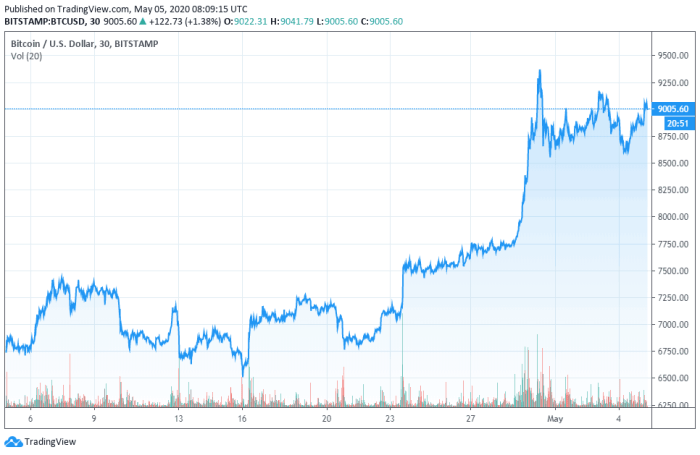
The third halving occurred on May 11, 2020, lowering the block reward from 12.5 BTC to 6.25 BTC. This event took place against the backdrop of a global pandemic and economic uncertainty, causing significant volatility within the financial markets. Leading up to the halving, Bitcoin’s price experienced fluctuations but demonstrated resilience.Key metrics surrounding this halving event include:
- Pre-halving price (January 2020): Approximately $7,200
- Price at halving (May 11, 2020): Approximately $8,800
- Post-halving price (December 2020): Climbed to around $29,000
Critical elements influencing the market reaction included:
- Increased retail investor participation due to lockdowns.
- The rise of decentralized finance (DeFi) platforms enhancing Bitcoin’s utility.
- Heightened institutional interest, with companies like MicroStrategy and Square investing heavily in Bitcoin.
This halving showcased a different market environment than the previous one, with macroeconomic factors creating layers of complexity in price dynamics.
Comparative Analysis of Market Environments
Both halving events reflect unique market environments that shaped price reactions differently. The table below summarizes key metrics and highlights for each event:
| Metric | 2016 Halving | 2020 Halving |
|---|---|---|
| Pre-halving Price | $450 | $7,200 |
| Halving Date | July 9, 2016 | May 11, 2020 |
| Price at Halving | $650 | $8,800 |
| Post-halving Price (6 months later) | $1,000 | $29,000 |
| Market Sentiment | Recovery from bear market | Pandemic-induced volatility |
| External Influences | Media coverage, institutional interest | Retail surge, DeFi growth, institutional buys |
These case studies and comparative metrics underscore the importance of understanding the nuanced effects of each halving event on Bitcoin’s price, shaped by varying market conditions and external influences.
Closure
Source: cryptopolitan.com
In summary, the implications of halving events on Bitcoin’s price are profound and multifaceted. From historical trends illustrating price movements to the influence of market sentiment and external factors, these events are crucial in shaping the future of Bitcoin. Understanding these dynamics not only enriches our knowledge of Bitcoin’s economic landscape but also equips investors with insights for future trading strategies.
Answers to Common Questions
What is a halving event?
A halving event is a programmed reduction in the rewards Bitcoin miners receive, which occurs approximately every four years to control inflation and supply.
How often do halving events occur?
Halving events occur approximately every four years or every 210,000 blocks mined.
What has been the historical price movement after halvings?
Historically, Bitcoin’s price has tended to increase significantly in the months and years following halving events, though past performance does not guarantee future results.
Do halving events affect miner profitability?
Yes, halving events reduce miner rewards, which can impact profitability depending on market prices and mining costs.
Are there any risks associated with investing around halving events?
Yes, while halving events can lead to price increases, they also come with volatility and market uncertainty, posing risks for investors.